
In this article
Picture this: Your company has developed an innovative diagnostic tool that can detect diseases in half the time of traditional testing methods. The tool could revolutionize the healthcare industry, but as your marketing team scrambles to spread the word, it faces a significant challenge – coordinating messaging and content across various platforms. The email team is creating targeted newsletters, social media is pushing out ad-hoc posts, and the content team is working on a detailed case study, perhaps a poster or a whitepaper and blog too. It’s not clear how the commercial team are contributing, and with so many moving pieces, the campaign is in danger of becoming fragmented. Instead of a unified, well-paced, consistent message, the different channels are sending out sporadic messaging not clearly connected to the right Ideal Customer Profile (ICP), and the campaign is losing its impact.
This is a common situation many science marketers have found themselves in. Oftentimes, the other big issue is that, quite simply, there is no marketing team – there are just one or two people who cover everything from strategy to reporting to tactical work and the creative itself. Without a systemized approach to campaign planning, it’s easy for your marketing efforts to quickly become disconnected and inefficient and for you to start feeling overwhelmed.
The solution?
A methodical approach to building an integrated campaign strategy, first and foremost. By investing the time you feel you’re short on upfront, you’ll find that you’ll create more cohesive, impactful campaigns that drive better results for your business.
At the heart of every successful integrated campaign lies content, of course, but to create the right content, you’ll need to define a single, overarching theme for the campaign that ties everything together. What’s the core campaign message? And crucially, how does it connect to other messaging your business already uses and future ones that it will create? However, it’s impossible to know the future, right? Yes, but what I mean is charting for yourself a simple diagram that shows how the campaign you’re planning can link to other themes or product verticals in your business depending, of course, upon the niches that your business intends to serve. This is step one, and I like to use a simple Venn diagram to aid my thinking.
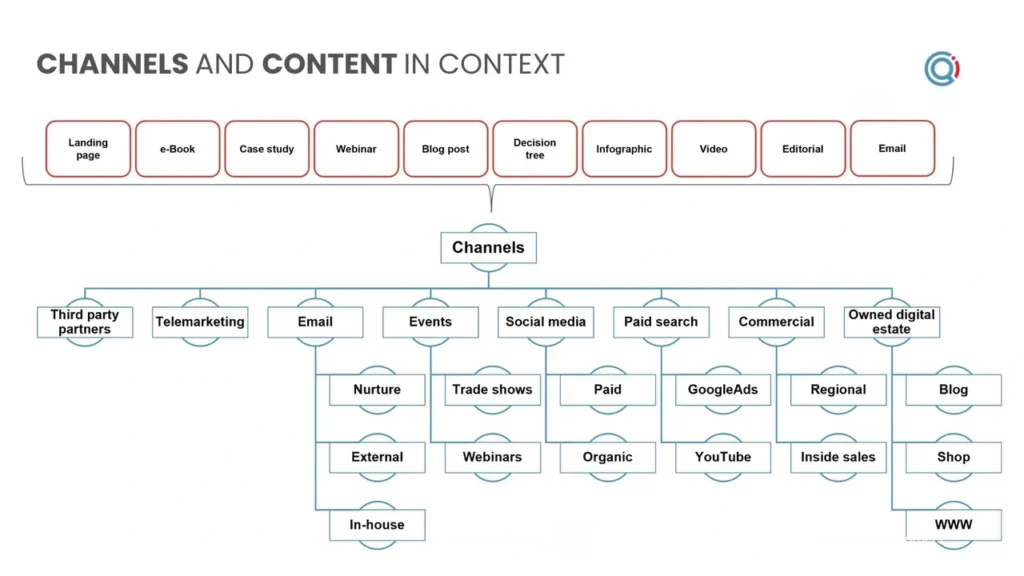
Once themes are defined, you can move on to drafting out a content stack that will serve as the backbone of your campaign. Science marketers need content that not only educates but also nurtures potential customers through the entire sales funnel. Whether you are creating blog posts, whitepapers, webinars, or social media content, it’s essential to ensure that each piece aligns with the buyer’s journey.
I suggest you create a list of content and then tag it with a label for each stage of the customer journey, from awareness to decision-making. (This will also support the creation of an effective lead nurturing automation process later down the line.) Each piece of content should be strategically crafted to engage with your ICP/target audience and feature a call to action as well as link nicely to the next content piece within your campaign. For example, educational blog posts are great for generating awareness but typically not so great for individuals who are at the decision-making stage. For them, you’ll need to offer the option of a case study or a whitepaper, perhaps a technical webinar or a consultation. In other words, if you’re simply driving awareness (if your brand or product is unknown to your ICP – and most brands fall into this category) you’ll need to think about generating more content that sits in the top of the funnel in year 1 of your campaign (infographics, images, blogs, video shorts, even podcasts). By mapping this out, marketers can maintain consistency across channels but, more importantly, pace themselves and budget calmly. No more reactiveness.
This is critical. Understanding what to aim for is the scaffold that your campaign sits on. Ask yourself the following questions:
This makes it possible to set clear KPIs and measurable objectives for each component of your campaign.
Once you are clear on what these are, these goals will inform everything else and will almost build the campaign for you. For example, if you’re focusing on driving product trials, make sure that all content, calls to action (CTAs), and promotions reflect that objective because staying focused is what will make your marketing efforts and investments feed the overall strategy.
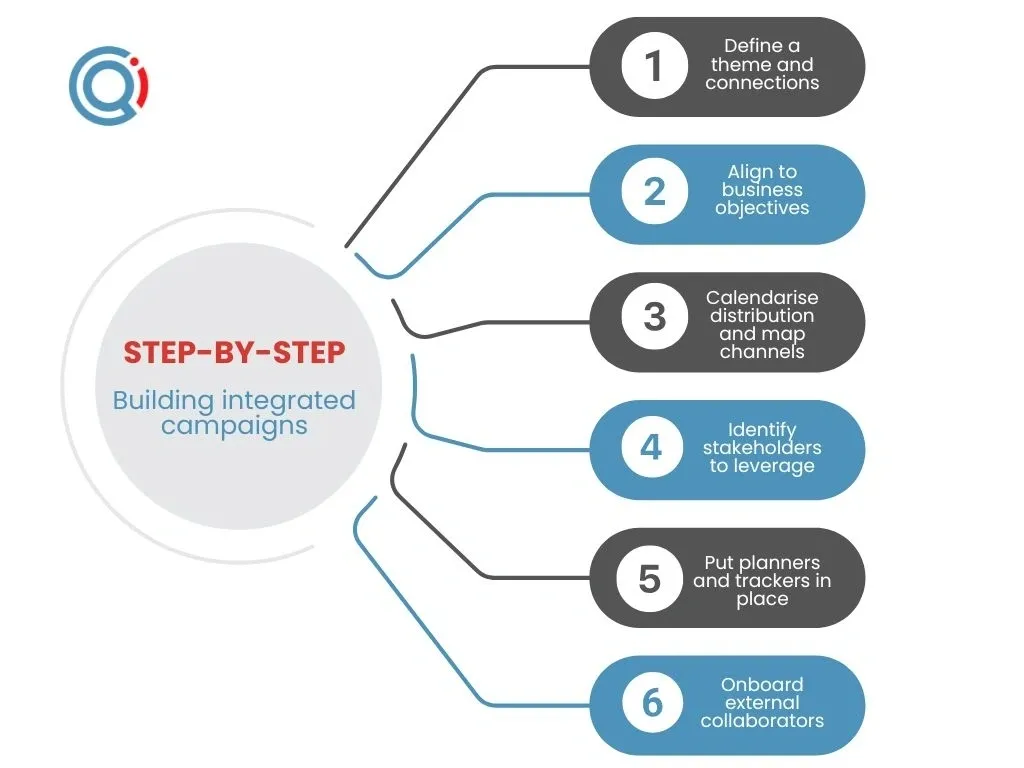
To avoid wasting time or diffusion of efforts and fruitless investment on ineffective tactics, calendarize the distribution. This involves creating a simple editorial calendar, aligning the timing of each content piece across various channels, and setting clear milestones for when certain materials need to be completed. Of course, your campaign landing pages are always first to launch so that you can drop your audience off somewhere – then all the other pieces connect around this. Having mapped your distribution channels and your content stack, this should be a piece of cake. Simply look at your critical dates for your new diagnostic tool launch and arrange content distribution around these dates. Of course, dates can and do change, but it is still worth making a plan – even if, in the end, there will be delays and slippage.
Timing strategy is important to think about because it helps to ensure that all the touchpoints you have designed for your audience reinforce each other. For example, if you’re launching that diagnostic tool, timing your blog posts, press releases, social media posts, videos, etc., to coincide with each other will generate momentum and strengthen the overall impact of your campaign. A content calendar also helps to keep all stakeholders aligned and informed, minimizing last-minute scrambling and ensuring that your campaign runs smoothly from start to finish.
Integrated campaigns are a collaborative effort, and they always require input from multiple stakeholders across your organization. From product development teams to legal/regulatory, sales, and creative departments, everyone involved brings unique skills to the table. To streamline your campaign execution, identify all the stakeholders who need to contribute and map out their skills and necessary levels of contribution.
For example, the product or applications team will provide valuable technical insights about the product and what end users think, while the legal/regulatory team ensures that all claims in your content are compliant with industry regulations. The commercial team can help identify the type of content assets needed to close the deals, and the creative team can develop text, visuals, scripts, etc. Knowing who brings which skills and capability to each part of the campaign means collective skills are leveraged, approvals are done on time, and everyone has a stake or feels a level of ownership in the overall success of your campaign.
Tools like Asana or Trello are great for managing an integrated campaign and all of its moving parts, as well as the contributors, in one place. With many scheduling and file-sharing tools stitched in, either of these is really useful and will help you stay organized. Beyond that, simple Excel sheets are best for tracking the completion of content pieces and their deployment and for recording the results from individual tactics over time. In our experience working with Life Science and Biotech clients an integrated campaign takes a few months to plan and at least 6 months to drip-feed deploy, then at least 12 months to really get a sense of how it has performed overall. Documenting all that planning upfront acts as a record of your thinking at the time. It also enables you to track progress and completion alongside the other projects that as a marketer you’re like to be working on in parallel – like events management or internal audits, CRM or CMS based work, reporting, attending meetings and other campaigns of course. It’s also great to create a tab to track the budget in one of your Excel sheets. You can refer to Qincade’s marketing campaign planner, which helps you manage budgets efficiently, ensuring your resources are allocated where they will have the most impact.
An effective way to streamline and strengthen your campaign efforts is by collaborating with external agencies that specialize in Life Sciences and Biotech marketing. Working with experts from agencies like Qincade allows you to gain insights into the best practices, trends, and strategies for integrated campaigns. External teams can handle time-consuming tasks like market research, content development, and distribution, giving your in-house team the bandwidth to focus on the critical elements of the business. They can also bring a different perspective, which is often very useful.
By collaborating with a specialist agency, you benefit from their deep knowledge of the sector and their ability to coordinate across multiple platforms. This kind of partnership can ensure that your campaign strategy stays on track and that all your marketing efforts are aligned toward a single goal – whatever that might be.
To succeed in integrated science marketing, it’s crucial to spend time planning and putting systems in place. The templates you create can serve you and your business forever. The plans you create serve as a guide but also a record so you can both execute and then refine.
Consistently.
Time after time.
By working with external agencies, implementing content-based lead management, and collaborating with key stakeholders across your organization, you can build campaigns that consistently outperform sector averages for lead conversion.
If you’d like to apply this framework to your next campaign, Qincade offers a complimentary campaign planning session for Life Science marketing teams. → Book a campaign planning session